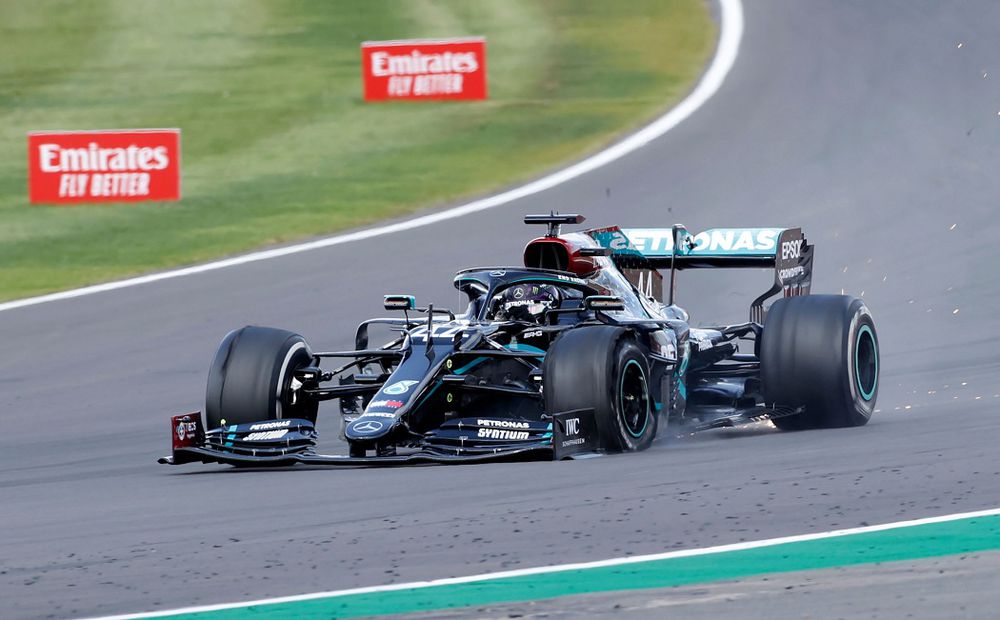
Lewis Hamilton’s triumph at the 2020 British Grand Prix at Silverstone has gone down as one of the most dramatic and unforgettable victories in Formula 1 history. For most of the race, Hamilton looked untouchable, leading comfortably in his Mercedes and appearing set for a routine win. However, the closing laps turned into chaos when tyre failures struck several drivers. First, his teammate Valtteri Bottas suffered a front-left puncture just two laps from the finish, dropping him from second place to outside the points. Then, on the very last lap, Hamilton’s own front-left tyre gave way. With the car violently vibrating and sparks flying as the shredded rubber peeled away from the rim, Hamilton was forced to complete the entire lap on only three functioning tyres.
Despite the immense difficulty of controlling a Formula 1 car at high speed in such a condition, Hamilton managed to keep his composure. His race engineer, Pete Bonnington, urged him to slow down and nurse the car home, while Max Verstappen—who had pitted for fresh tyres moments earlier—was charging behind at full pace. The gap between them shrank rapidly, but Hamilton had built enough of a cushion earlier in the race to cling on. He crossed the finish line just five seconds ahead of Verstappen, securing his seventh British Grand Prix victory in front of empty grandstands due to the pandemic restrictions.
The image of Hamilton limping across the line, steering with precision while his car dragged itself forward on three tyres, instantly became iconic. It highlighted not only his skill and calmness under pressure but also the fine margins that define Formula 1. A single lap later, Verstappen would likely have taken the win, but Hamilton’s ability to adapt in crisis ensured the result. The victory was celebrated as a testament to his resilience, racecraft, and determination, adding another legendary chapter to his career and reinforcing his reputation as one of the greatest drivers in the sport’s history.